
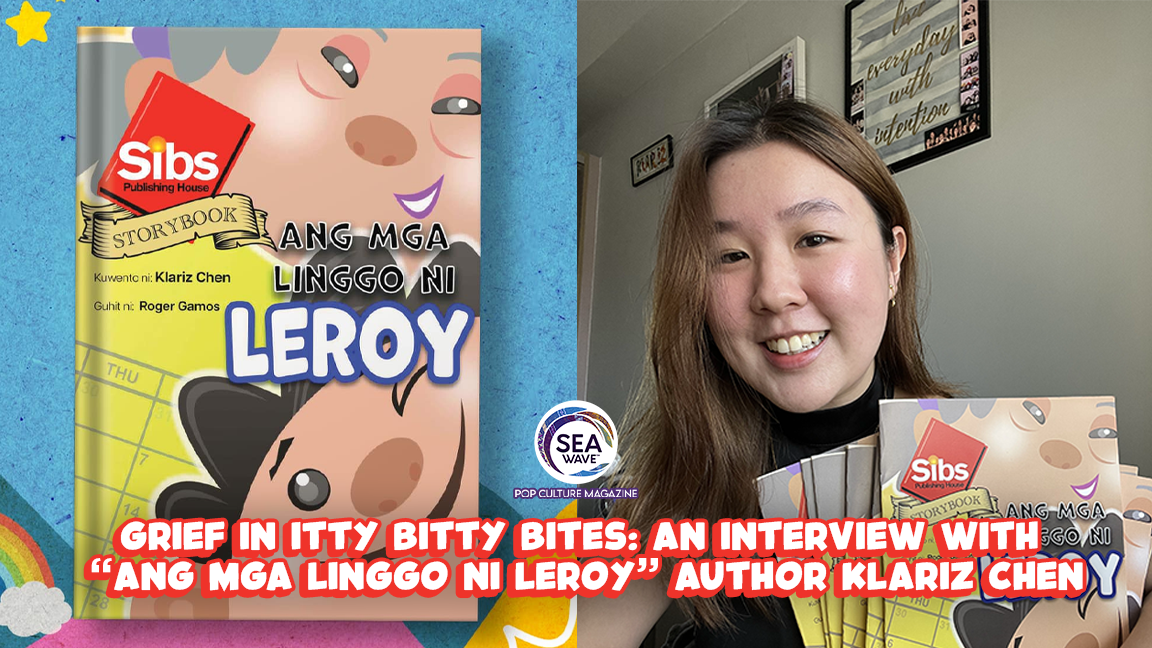
If you were to picture your emotions right now, what would they look like? It’s probably easy for us adults to describe how we feel, but for a child, it could be hard as they can’t fully grasp the intensity of these emotions. To help them, we have to explain it on their terms—and what better way to do that than with a book catered to them? The heartfelt book, Ang Mga Linggo Ni Leroy, written by Klariz Chen, answers these questions and more.
Ang Mga Linggo Ni Leroy is a children’s book published by the Phoenix Publishing House. The story follows Leroy as he deals with his baffled thoughts as to why his grandmother doesn’t visit anymore. Join us as we take a peek behind the curtain of this itty-bitty bite of grief and get to know the author who wrote it.
Opportunities Birthed Possibilities
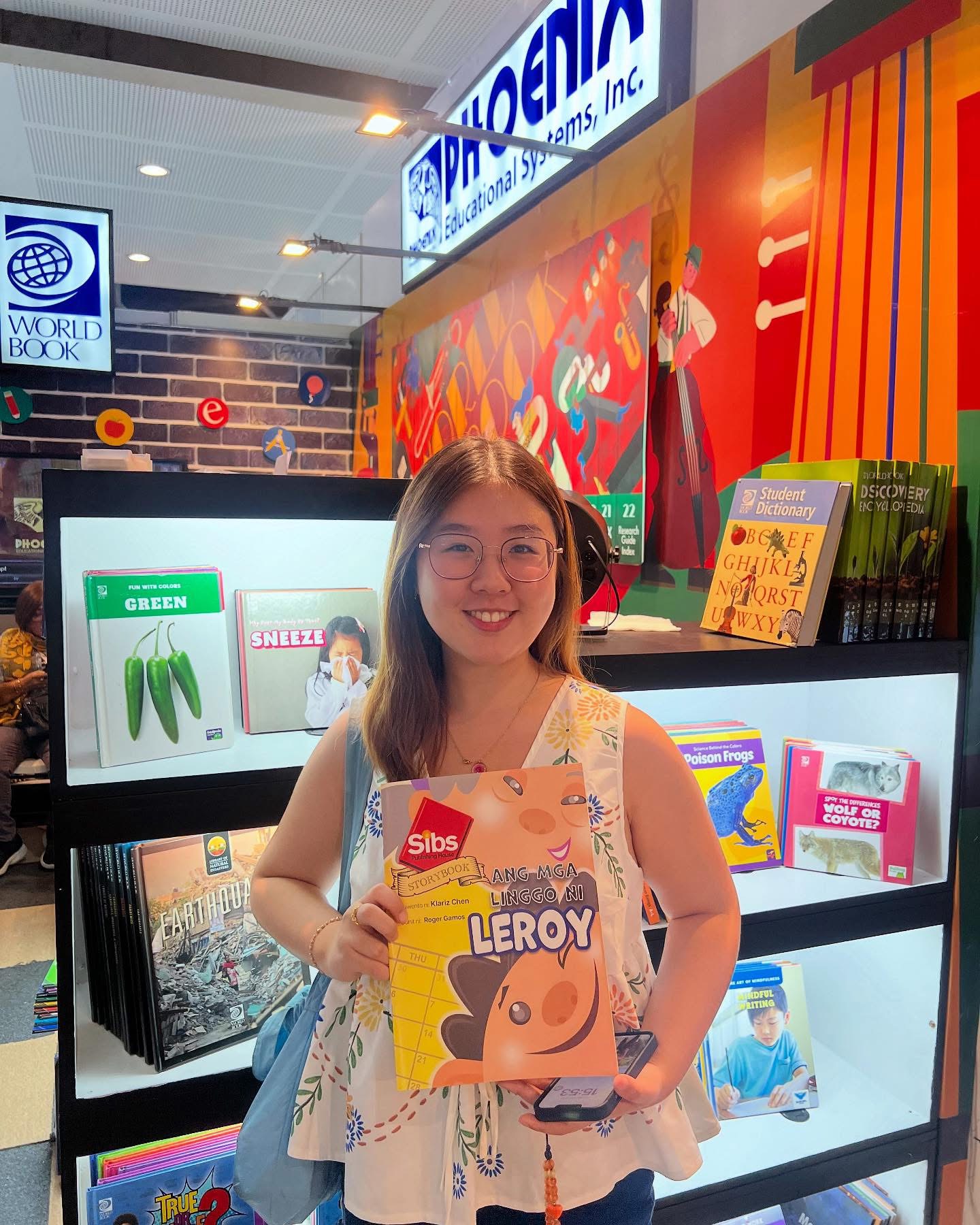
During our interview, Chen shared how she became a writer and how the book came to life. Even at a young age, writing came naturally to her, and it became a way of expression. With the help of authority figures in her life, Chen was able to actualize her potential as a writer from as early as elementary school.
“I remember back in elementary school, my Filipino teacher, Mrs. Edrosa spoke to my mom about moving me up a section so I could join the Journalism class. I guess she saw something in my writing, and that opportunity allowed me to explore different forms from editorial to feature writing to photojournalism, under the guidance of Mrs. Yumol,” Chen shared. From there, her skills only grew, and in college, she got noticed by her business professor, Ms. Marissa Marasigan. Upon reading her essay for the class, Ms. Marasigan suggested that Ms. Chen submit her piece to the Manila Times editorial section. Who knew that a class on numbers could become a catalyst to pursue writing as a possibility?
From Necessity to Meaningful Artistry
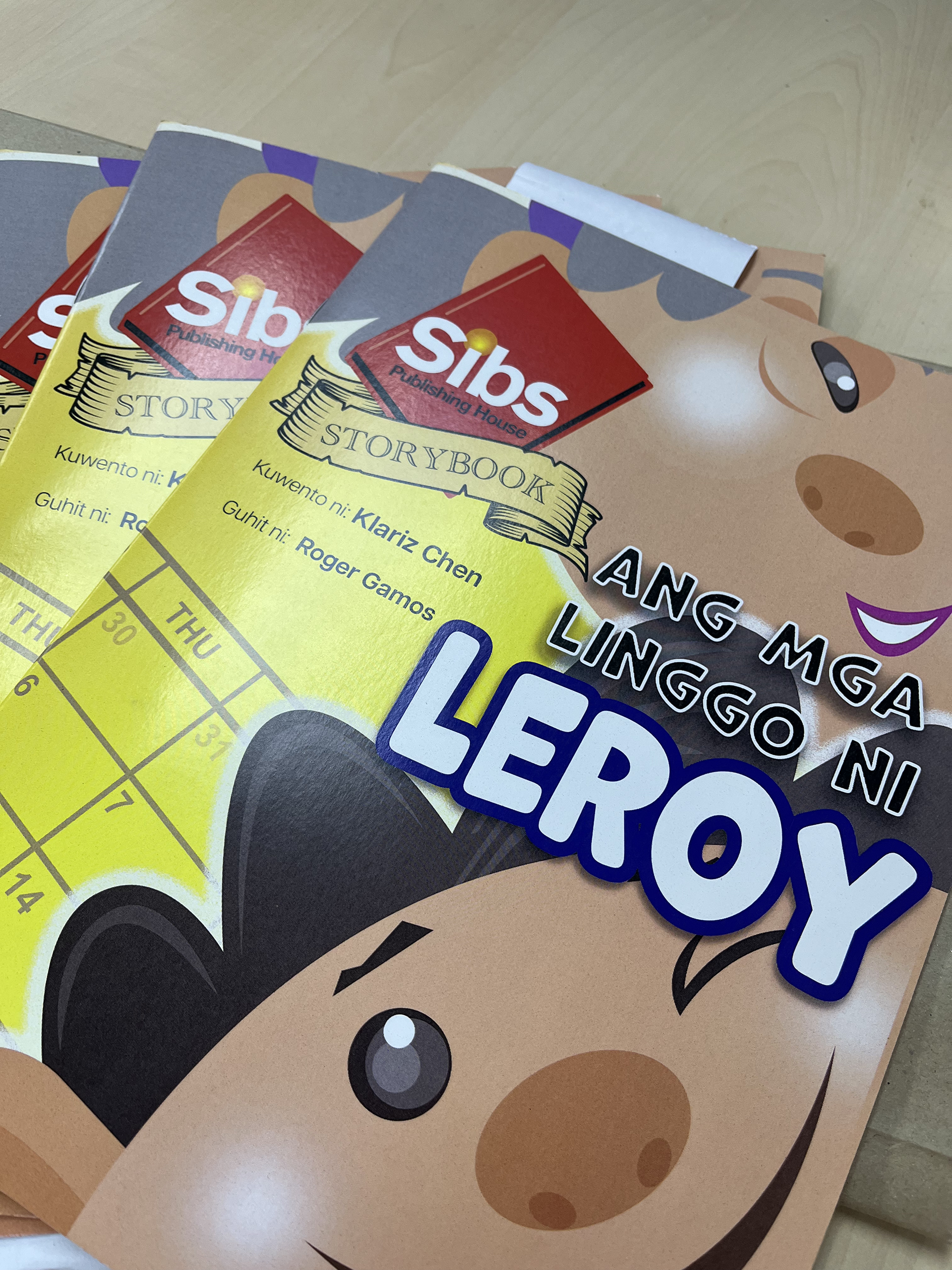
All these experiences led to her brainchild, Ang Mga Liggo Ni Leroy. The book was not planned at all. “The manuscript started out as a class output for our Creative Writing course in college. My professor, Sir Genaro Gojo Cruz, happened to be an established children’s book author, so our entire syllabus revolved around writing for children,” Chen recollects. After presenting the story for her finals, her professor encouraged her to get the piece published.
At the time, Chen said she did not think much of what her professor said; it was a kind compliment to her. But when she saw the draft of the book last year, she rethought what her professor said to her and took a chance. That is the moment she submitted her piece to publishers. “Phoenix was one of the first to get back to me—and the rest, as they say, is history,” Chen shared.
Writing Reflects Our Subjective Experiences
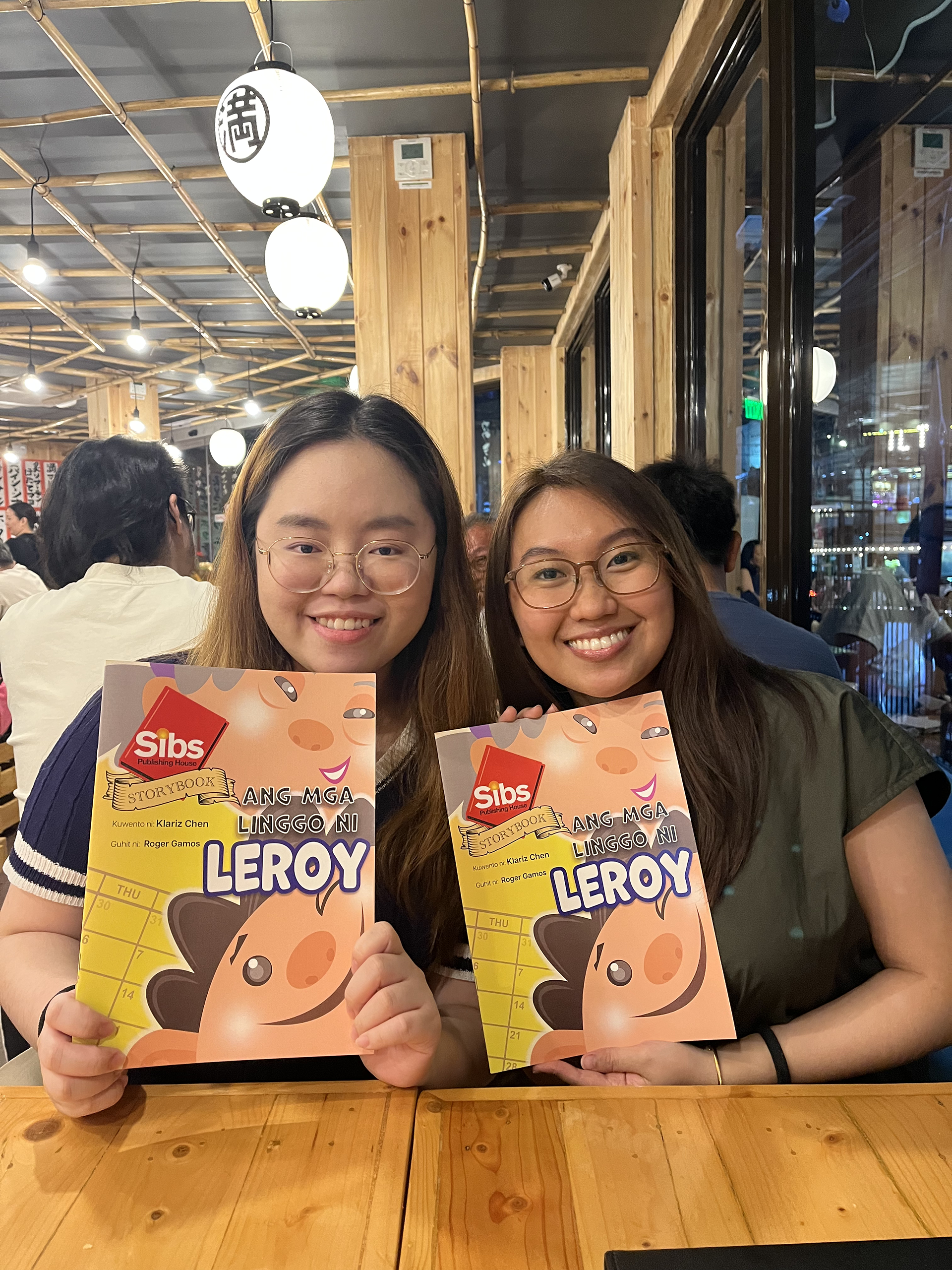
Things happen to us all the time—sometimes mundane, sometimes overwhelming—but how we react and understand those events is entirely personal. Grief, no matter the reason, leaves a hole in our lives that we have to choose to crawl out from on our own accord. COVID was a tragic yet undeniable catalyst for such emotion and circumstances.
Chen explained that she drew inspiration for writing Ang Mga Linggo Ni Leroy from her own experience and those around her. “My lola passed away during the height of the 2nd ECQ (enhanced community quarantine) during COVID, the same year I was taking my creative writing class. For the children’s book, our professor asked us to imagine a concept or moral lesson we wanted to convey to a young child. I thought of my little cousin—he became the inspiration for Leroy.”
She adds, “We used to visit my lola almost every Sunday, and he’d always be there. But as she got sick, he saw her less, and then COVID struck, and he never saw her again. I kept wondering how the sequence of events looked through his young eyes and how he was processing all of it. How do you even explain something like that to a child?”
Explaining adult subject matters to a child who still has little to no knowledge about life could be quite daunting, especially without dimming the light of their eyes. Thankfully, there are children’s books for that, like Dr. Seuss or the award-winning books from the Adarna Publishing House. Now, we also have Chen’s book on grief through the lens of a child. When asked why she wrote a children’s book about the heavy emotion rather than a nonfiction book on how to deal with grief, she answered, “There are already countless stories, quotes, and metaphors about grief for us out there, but few to none for children. I kept asking myself: how do you distill all that into something a child can grasp? That’s when I thought it might be helpful to create something that could serve as a tool for parents or guardians, something that could gently guide children through difficult emotions.”
The Nuance of Writing a Child for a Child
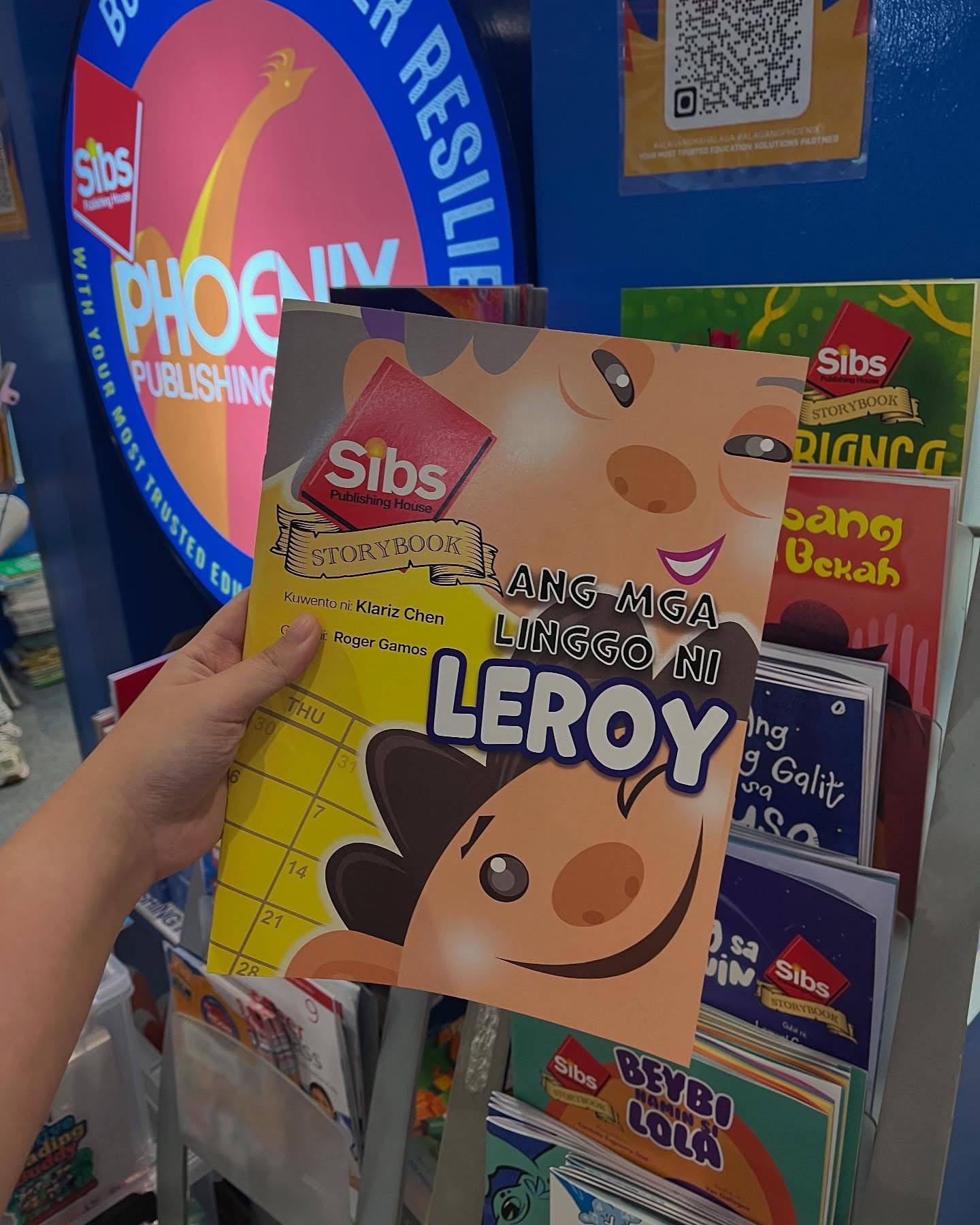
Children learn to relate to others by observing what happens at home—how their parents and how other people around them would treat them and talk to them. Chen’s book highlights those nuances through the repetition of interests and patterns that Leroy is used to when they visit Lola on Sundays. She shared her difficulties, “With Ang Mga Linggo ni Leroy, from the writing stage all the way to submitting it to publishers, I genuinely wasn’t sure how effective the book would be. Would children actually want to read it? Was I able to communicate my message clearly? These were questions I kept asking myself throughout the process. Sometimes, it’s even these doubts that would paralyze me from proceeding.”
But in the end, the book translated the process of understanding from a child, as well as enough thought and heart, to help adult readers explain the complexities of grief to their own younglings.
Despite being young, children do notice changes, but how they react to these changes is aided by how we older people explain things to them. The book does that when Leroy’s mom explains that Lola is resting now. It’s a simple and easy-to-understand way to explain the events and motions to a child.
That part reminds me of Young Sheldon’s season 2 episode 3. Sheldon rationalized Mary’s grief through terms that she could understand while still explaining it in a way that he understood as well. At first, he blamed himself for the change in Mary’s actions. When reassured he isn’t to blame, Sheldon opted for a scientific explanation and concluded, “…there are 5 billion people on this planet and you’re the perfect mom for me.”
The same happens in Ang Mga Linggo ni Leroy‚Leroy asks for reassurance, and both he and his mother talk and carry the burden of the loss in terms that Leroy understands. The book ends with the family visiting Lola at her grave.
It’s worth noting that the book also has reflection questions, which help with the processing of both emotions and the reading comprehension of the children.
From A Writer to You, The Reader

“This story is also my small contribution to Filipino children’s literature. While it’s wonderful that we’re seeing more local titles and Filipino authors, I wanted to be part of that movement too—to help nurture a love for reading in young minds, and more importantly, a love for reading Filipino stories in this day and age that’s full of English shows and references,” Chen expressed.
It took her a week to complete her book, all the while juggling academic requirements, life commitments, everything all at once. With that in mind, she has a few tips for writers everywhere—the first being: just go for it! She shares that the draft of the book would’ve stayed in her laptop if she hadn’t taken the small leap of faith. “Look for ideas, find your purpose, write, and send it out to publishers. If it works out, that’s amazing! If it doesn’t, gather feedback, improve, and explore other ways to get your work out there. The right opportunity often finds those who are actively seeking it.”
Her second tip is to treat getting published like applying for a job. She didn’t have connections, so she began researching and reaching out to publishers in the country. Despite receiving her fair share of rejections, Chen shares, “I wasn’t expecting much, so imagine my disbelief when I got a call from Phoenix. It felt surreal.”
In the end, Ang Mga Linggo Ni Leroy was written with heart, the thought of her cousin, and hope that “somehow, someday, it could help him or other children–and the adults around them—make sense of something as complex and difficult as grief.”
Grab your copy of Mga Linggo Ni Leroy in Phoenix Publishing House.
Do you have authors you want featured in SEA Wave Deep Dive? Let us know in the comments!