
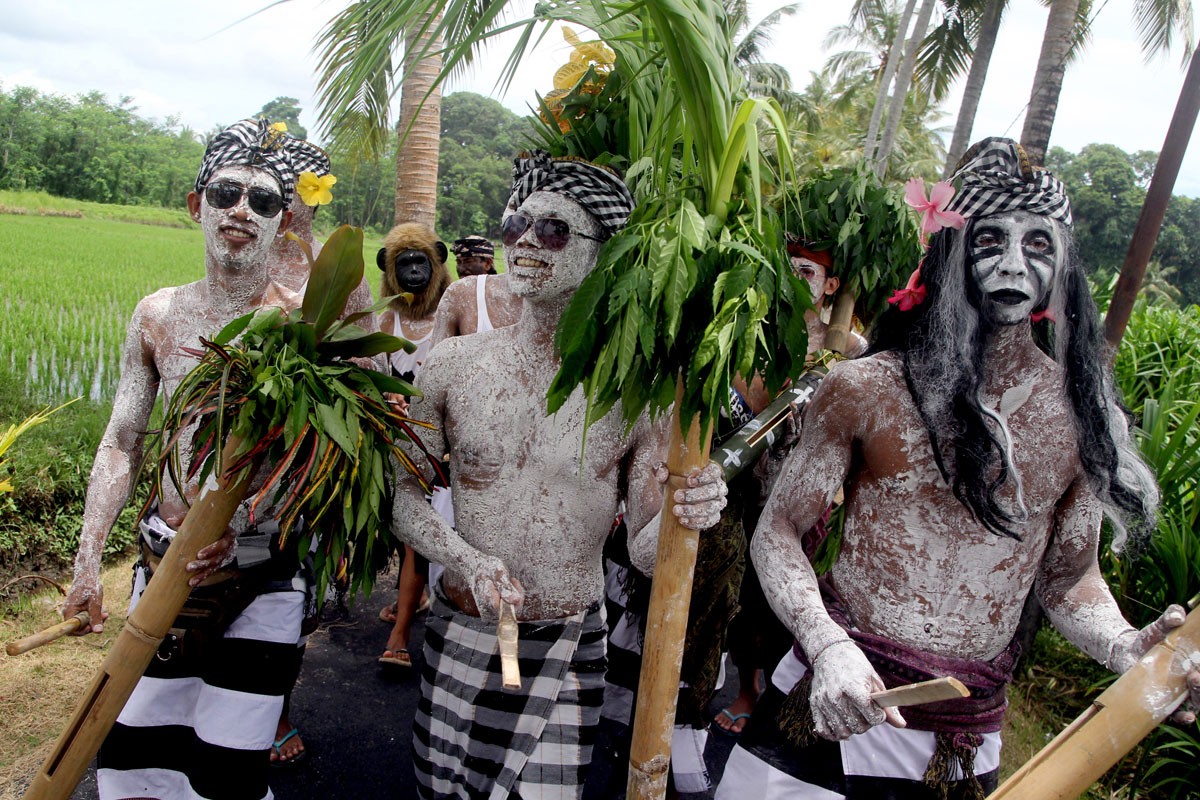
What does protection from evil look like? For the people of Kemenuh Village in the tropical dreamscape of Bali, it’s a parade of painted people, making as loud a noise as possible.
According to the Ngedeblag Tradition in the Kemenuh Traditional Village, Sukawati District, Gianyar written by Ni Putu Dian Yudiani, I Wayan Mandra, and I Ketut Gunarta of the Hindu Religion Research Journal of the Denpasar State Hindu Dharma Institute, the tradition began from the Brahmin Kemenuh family of Tegal Wanasari village. The brahmin is the highest caste in the traditional Hindu caste system and is responsible for teaching, studying, and preserving sacred knowledge.
Ida Nyoman Kemenuh, the patriarch of the family, was struggling as an epidemic was plaguing the village. It first took his mother and father, and was quickly spreading among his people. In order to prevent further damage, he performed a meditation that asked Ida Sang Hyang Widhi Wasa (the god in Hinduism) for protection and safety. When Ida and the townspeople performed gamelan music paired with the voices of the community, it was said that Ida Sang Hyang Widhi Wasa heard them, stopping the outbreak. Hence, the loud noise that the ceremony produced became what is known as Ngedeblag today.

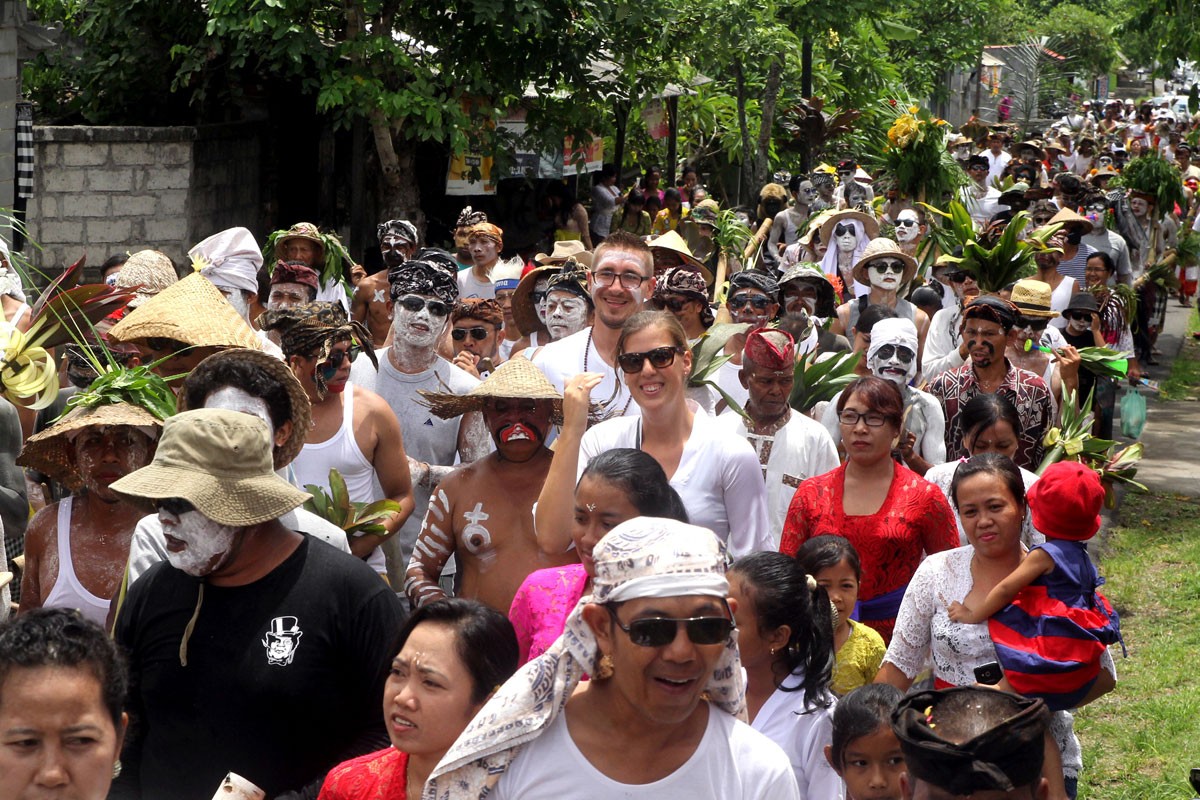
Photos from Jakarta Post
Tradition-wise, Ngedeblag is a procession where people wear scary costumes and makeup, and play wooden and metal instruments that drive away the negative forces that are said to disrupt life. It’s performed three times on the fifth month (Kalima), the sixth month (Kaenam), and the seventh month (Kapitu) of the Balinese calendar. When the clock strikes noon, the ceremony starts with the whole community coming together for the procession, covered in paint and wearing traditional Balinese attire. The sight could be eerie for those unfamiliar, earning it the nickname “Balinese Halloween,” but it truly speaks to the communal culture of Kemenuh Village that people of all ages, even visitors, can join Ngedeblag without any fanfare.
By the end of the ceremony, the community is sprinkled with holy water blessed by Ida Sesuhunan (gods and ancestors). The whole tradition aims to strengthen the bond of the Kemenuh Village and ward off evil, protecting all the people involved in the ceremony.
What do you think of this unique Indonesian tradition? Tell us in the comments!