
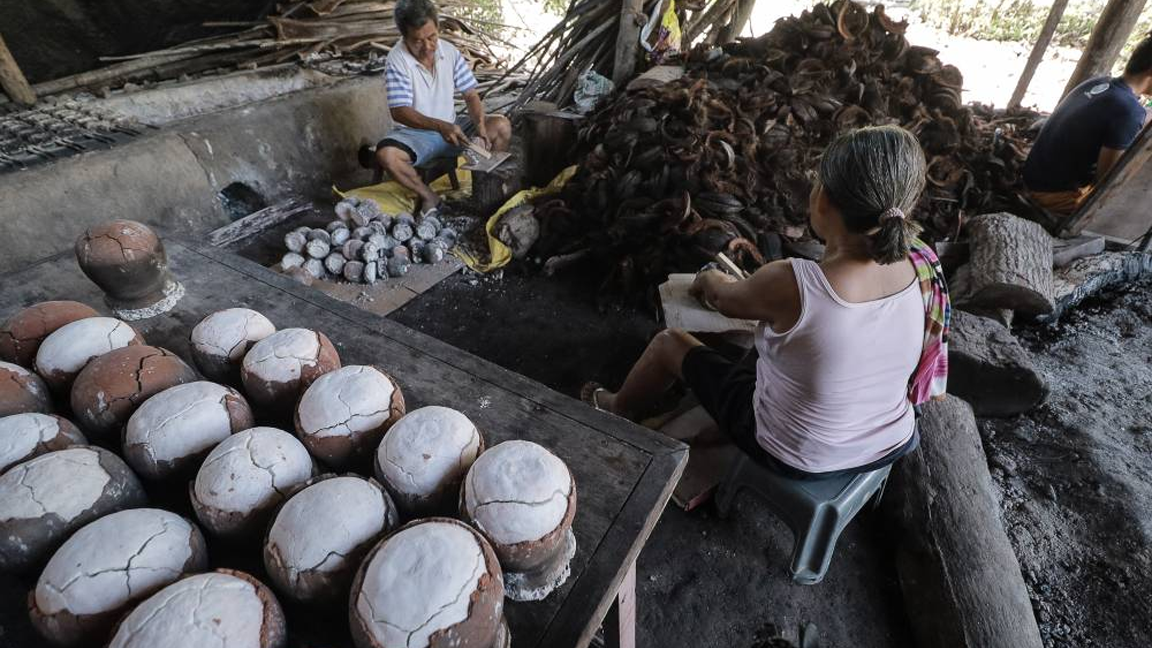
Salt is a big part of Filipino cuisine. Used for preservation and flavoring, it has become entwined with how Filipino food is perceived around the world. And while we may take the conventional packaged refined salt for granted, there are craftsmen in the country practicing traditional ways to create a beautiful product from this precious resource.
Asin tibuok or “unbroken salt” is an artisanal product from the island province of Bohol. Dating back to the precolonial era, it was used by asinderos (saltmakers) in need of rice to trade with rice farmers in need of salt. The traditional process of making asin tibuok involves months of preparation, starting with submerging coconut husks in seawater to absorb sea minerals, cutting the husks into small pieces and drying them, burning them down to ashes, filtering the salt with seawater, and boiling the brine in special clay pots, until salt forms into a solid and unbroken block dome.
Such practice needs to be delicate and precise so as not to break the clay pot containers, requiring years of mastery to get the right product. This is the result of centuries of techniques passed down from generation to generation, and is the reason why asin tibuok is one of the rarest and most expensive salts in the world.
Veronica Salupan, one of the proud preservationists of the practice, shared that to them, making asin tibuok is spiritual, with strict rules to follow, such as who gets to be present while cooking, what to wear, and at what time these practices happen. In an exclusive interview with SEA Wave Pop Culture Magazine, Veronica shared her experience in receiving and passing down the tradition of asin tibuok.

In 2018, asin tibuok was inducted into the Ark of Taste international catalogue of endangered heritage foods. With this rise of awareness about the artisanal product came a wave of new customers, however, due to the rarity of asinderos and other external factors, it has been difficult to keep up with demand. “It can be a challenge if the saltwater being used in salt making gets contaminated by things like rainwater. The process can be ruined just by stormy weather,” Veronica shared as she discussed the importance of timing, purity and the perfect conditions to maintain product quality.
Veronica shared that their asin tibuok weighs at about 1 to 1.25 kg and is priced at PHP 800 (USD 14). There are also smaller sizes that range from PHP 500 to 600 to cater to bigger batches. And while the demand is not dying down any time soon, the salt making facility manages orders and reiterates the time-consuming process that takes to make just one dome of asin tibuok.
“We are grateful to those our customers. Because of them, we can continue the legacy of our forefathers and show their products to the world. My wish is that they continue to patronize us so we can continue honoring our ancestors,” Veronica added, with the hope to continue the tradition for more years to come.
Veronica, along with her siblings, took the responsibility of preserving this dying craft and are looking to standardize the process of asin tibuok to continue nurturing and respecting the centuries-old tradition. They are currently taking steps to train younger family members under their wings to pass the practice on.
The practice of making asin tibuok is up for nomination for UNESCO’s Urgent Safeguarding List 2025 for cultural heritage, in the hopes of preserving this dying tradition that only a few families are able to practice today.
Have you tried using asin tibuok? Share your experience and let us know in the comments below!