
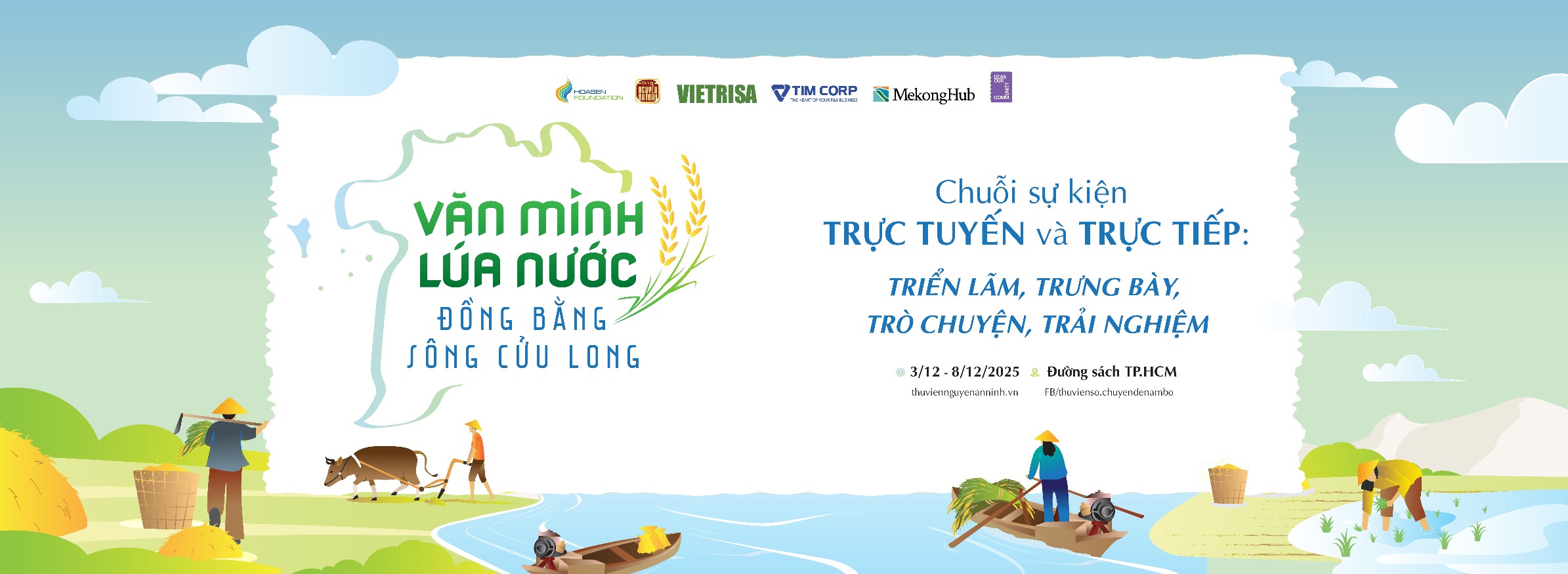
The Mekong Delta in Vietnam is known as the “rice bowl” of the country. Also known as the “river of nine dragons,” this area is formed by a network of swamps and rivers, including the Mekong River that irrigates the vast lush and beautiful landscape of the region. It’s also the home of 140 ornate temples, Tra Vinh City, and Long Binh river’s wet market.
The Mekong Delta is not just significant for its landmarks and its role in maintaining ecological balance, but also for its abundance of historic stories and literature. This year, as part of the HCM City Book Street, the Nguyen An Ninh Digital Library is organizing an event for visitors to learn more about the Mekong Delta, as well as preserving various papers that document the history of the area through a digitalization effort.
The theme of the event is Van Minh Lua Nuoc – Dong Bang Song Cuu Long (Wet Rice Civilization in the Mekong Delta). The person in charge of the library, Quách Thu Nguyệt, shared in an interview with VietNam News that the program is one of three major events held by the library to honor Vietnamese culture. “It includes a series of exhibitions, talks and discussions portraying slices of history, culture, people and the potential of the land of ‘Nine Dragons,’” shared Nguyệt.
During the event, visitors can learn about the importance of the Mekong Delta through exhibits, talks about seasonal rice and the cultural life of residents, and a discussion about the chivalry of southern people through the Vietnamese epic poem Luc Van Tien by poet Nguyen Dinh Chieu.
“This program seeks to honour the material, scholarly, cultural and spiritual values of the Mekong Delta’s wet rice civilization,” shared Chung Hoàng Chương, a researcher at the HCM City University of Social Sciences and Humanities.