
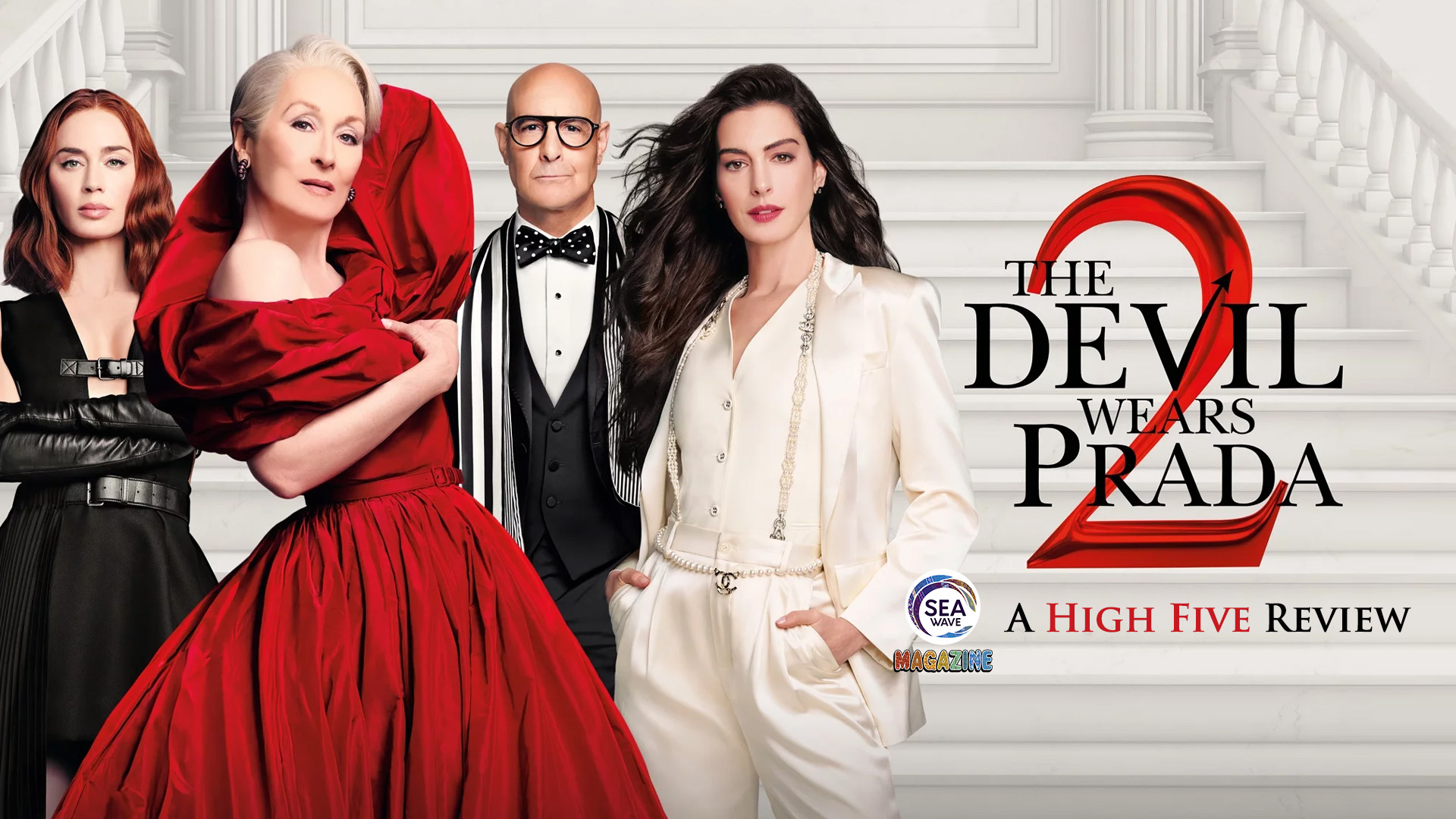
Alright, everyone, gird your loins! After two decades, Meryl Streep, Anne Hathaway, Emily Blunt, and Stanley Tucci finally return for The Devil Wears Prada 2.
Set against the decline of print media and a rapidly changing digital world, the sequel reunites Andy Sachs and Miranda Priestly as they fight to keep Runway relevant in an industry that no longer plays by the same rules.
A lot has changed in this sequel (except Andy’s eyebrows). Was it worth the 20-year wait for this story to unfold? Here is SEA Wave’s High Five Review of The Devil Wears Prada 2.
A Story Only Time Could Tell
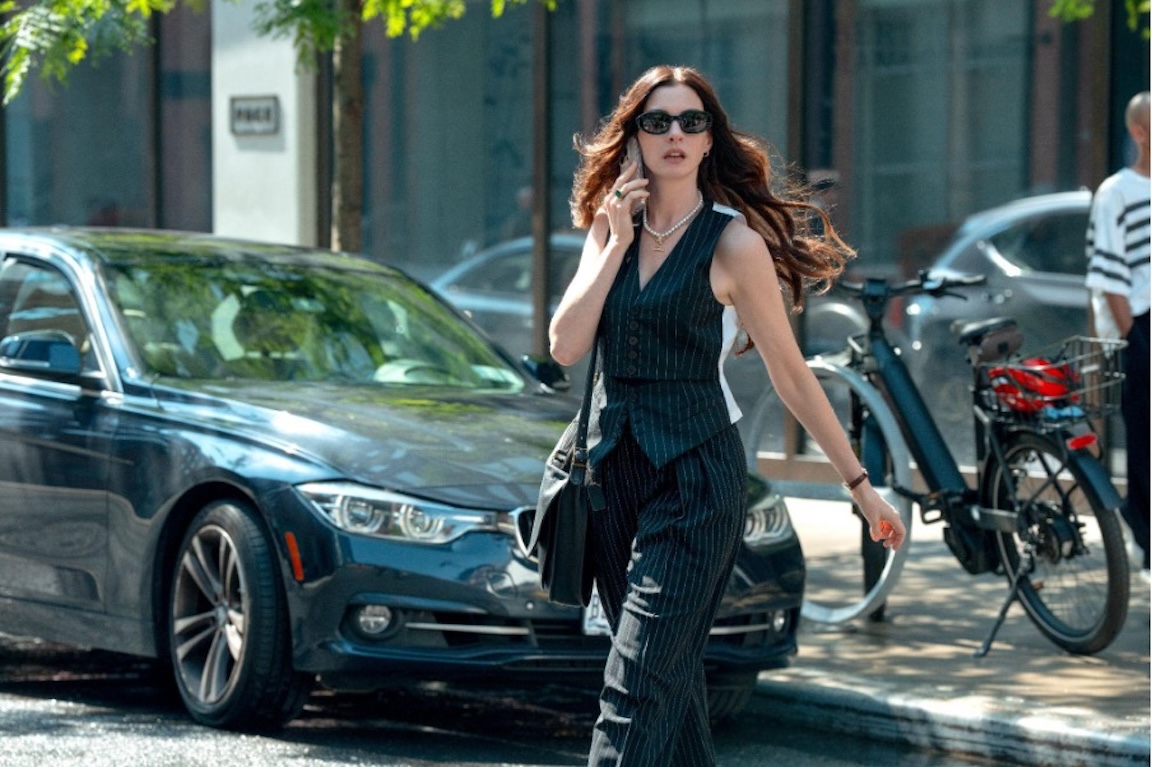
Still from 20th Century Studios
The Devil Wears Prada 2 tells an original story that could only exist today. Scenes and conversations quickly establish how much fashion, media, journalism, and society have evolved over the last two decades. It’s not about art and prestige anymore, but about branding, algorithms, social media engagement, and digital relevance.
Fast fashion, online culture, AI, and technology become looming threats throughout the story, reflecting modern fears surrounding industries, creativity, and even people becoming replaceable. Because of this, the sequel carries a fundamentally different tone from the original. It is no longer simply about self-discovery or surviving a difficult boss, but about adapting to a rapidly changing world. The story transcends fashion and becomes a reflection of modern society itself.
The sequel feels more grounded, socially aware, and realistic than the original film. While some audiences may find this realism less escapist or glamorous, it is also what makes the sequel feel timely and relevant.
Unmasking the Devil Herself
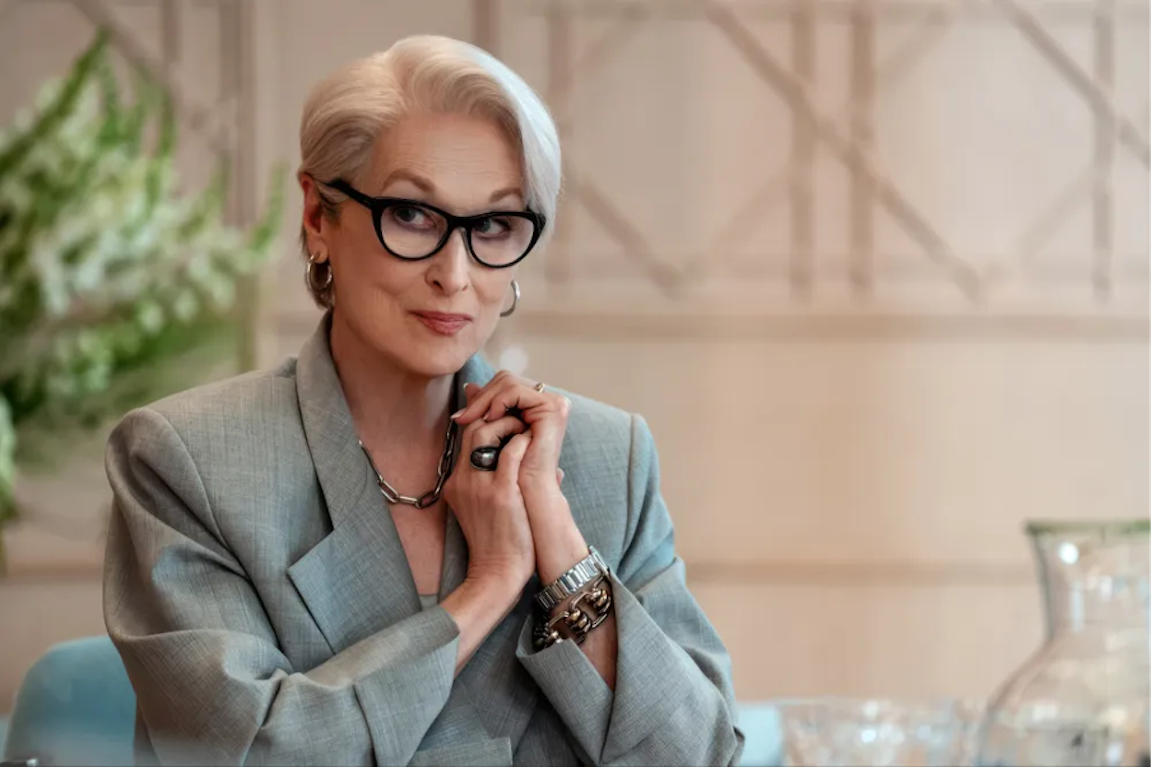
Still from 20th Century Studios
Miranda Priestly defined The Devil Wears Prada despite having less than 30 minutes of screen time. In the sequel, she not only appears more frequently, but the film also delves deeper into the person behind the iconic figure, revealing her humanity and complexity beyond the legend.
Unlike before, we see her perspective more directly, exposing the emotional cost of her power as she navigates a world she can no longer fully control. This softer portrayal may initially feel surprising—Miranda is less sharp and more restrained, as the modern workplace forces her to operate differently. This shift brings humor, along with long-overdue appreciation and tender moments that feel earned after the events of the first film.
Despite this added vulnerability, the story’s treatment of Miranda Priestly still feels true to her character—a payoff the sequel takes its time to reach.
It Served Fashion, Nostalgia and Starpower
The Devil Wears Prada 2 consistently acknowledges its predecessor through dialogue, visuals, and story beats. Rather than functioning as isolated fan service, callbacks are woven directly into the narrative, including mirrored plot points, costume design, and styling references that echo the original film’s identity. The film also leans into structural nostalgia, with opening and closing moments that reflect the tone and rhythm of the first movie.
While some moments may feel overly referential, the callbacks ultimately succeed in honoring the legacy of the original while still attempting to build something new.
This sense of nostalgia is further amplified by its stacked ensemble, with returning characters appearing in both major roles and brief moments that still feel rewarding. Icons and familiar faces from the fashion world surface throughout, adding an extra layer of glamour and reinforcing its industry setting. New additions—particularly Simone Ashley—also make a strong impression despite limited screen time.
Characters That Never Go Out of Style
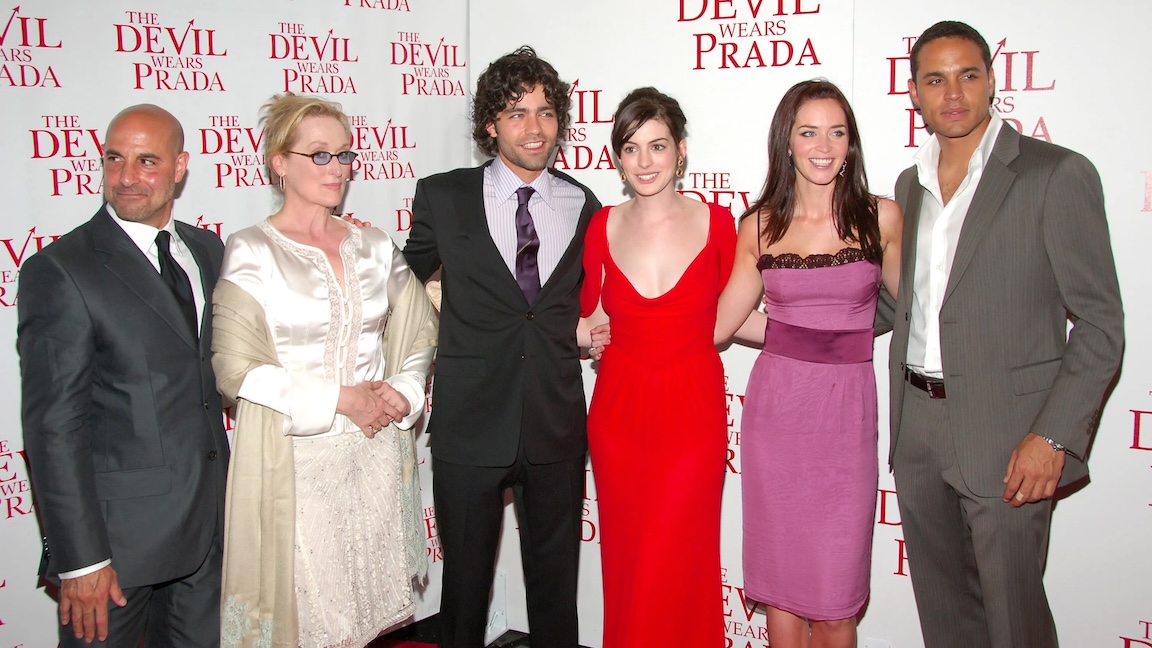
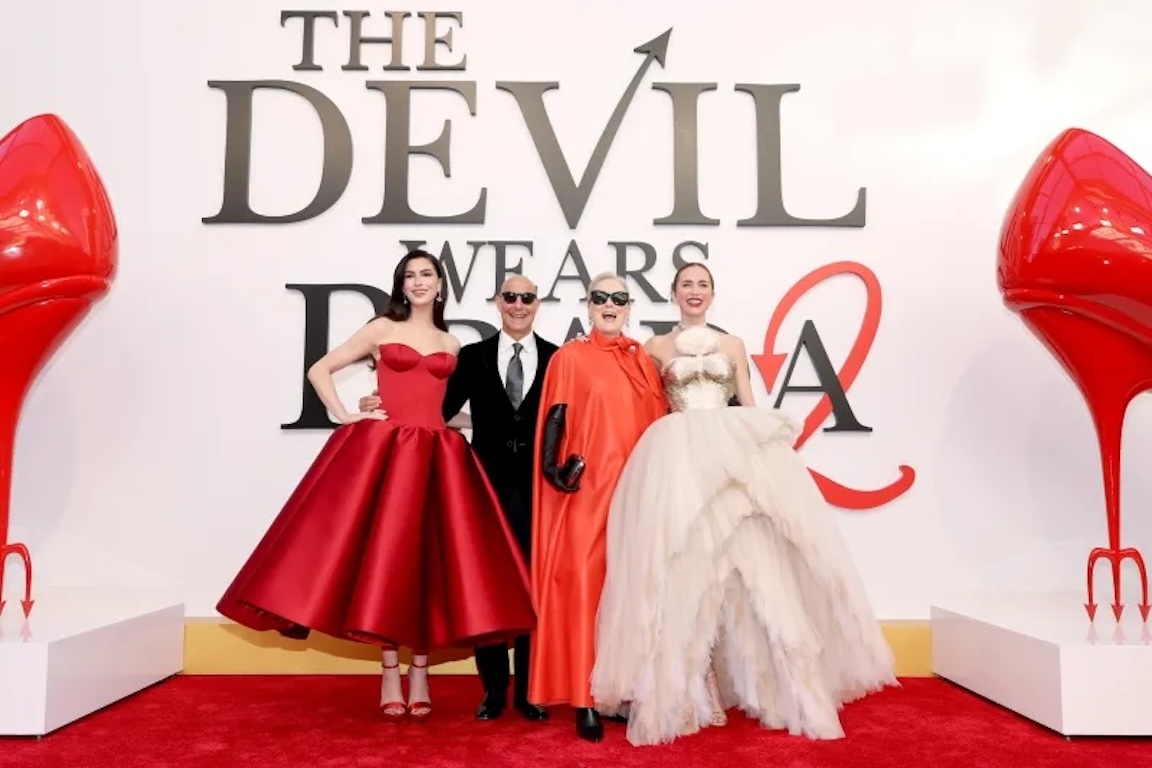
Even after twenty years, the chemistry between the core four remains intact, and their relationships continue to anchor the film. Their returns feel less like nostalgia bait and more like a natural extension of who they’ve become.
At its core is the dynamic between Andy and Nigel, where long-standing threads quietly gain new weight, giving his presence a sense of overdue significance. His influence subtly reframes much of what unfolds, reinforcing how interconnected these characters have always been.
That sense of continuity extends across their relationships, where old tensions and bonds resurface with a more grounded emotional texture. Even Andy’s return to Runway feels more meaningful through these connections, underscoring that the franchise’s lasting appeal lies in its characters rather than its iconography.
A Sequel Worth the Wait
Sequels are always at a disadvantage because they exist in constant comparison to their predecessor, and this film is no exception. The Devil Wears Prada 2 continually operates in conversation with the original, carrying both its legacy and expectations.
While reactions to its story direction and character choices may vary, the sequel ultimately succeeds in preserving what made the original resonate. It evolves alongside both its characters and its audience, resulting in a continuation that feels intentional rather than unnecessary. The ending reinforces this balance, offering an ideal conclusion rather than a perfect one.
Even if not every new element immediately reaches the iconic status of the original, the foundation is strong. It may take time for the sequel to produce its own defining moments, but the effort feels genuine—and ultimately, it stands as a continuation worth the two-decade wait.
SEA Wave rates The Devil Wears Prada 2 4 out of 5 waves. That’s all.