
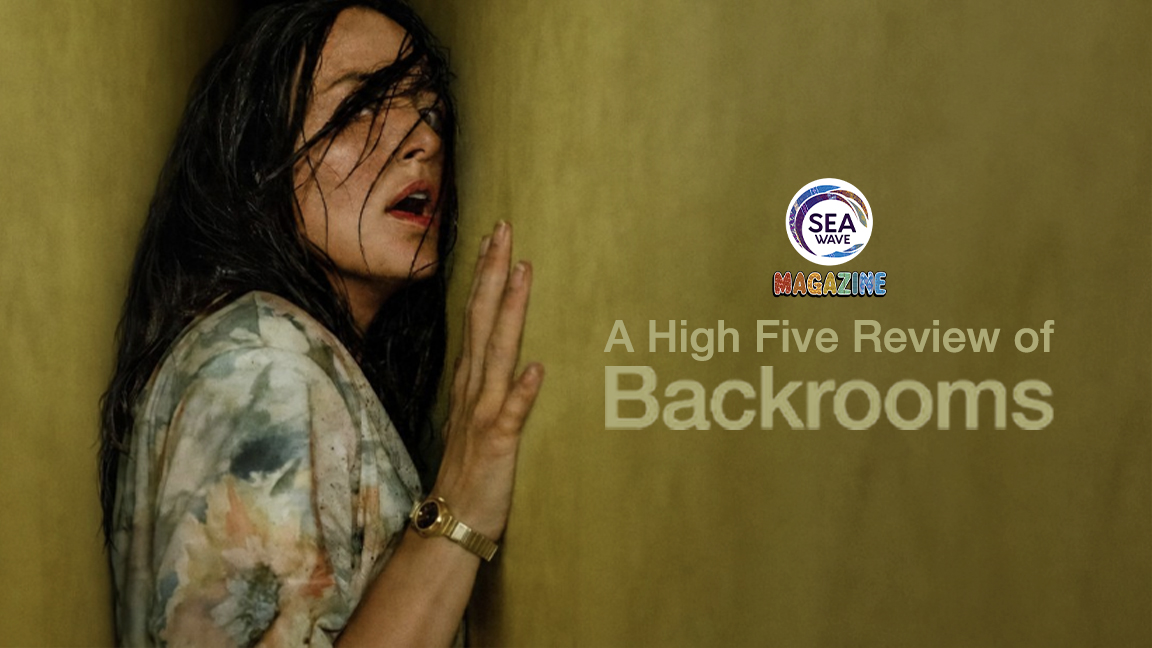
“If you’re not careful and you noclip out of reality in the wrong areas, you’ll end up in the Backrooms.”
Backrooms follows a group of individuals trapped inside an endless, unfamiliar space that feels slightly off from reality. As they try to find a way out, they are met with an environment that grows increasingly unstable and dangerous.
Stay with us as we navigate this labyrinth of a film in SEA Wave’s High Five Review of Kane Parsons’ Backrooms.
The Culmination of Digital Lore
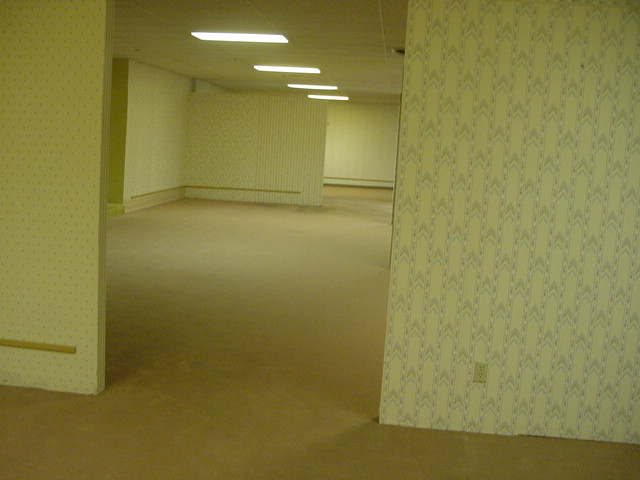
Image from Anonymous User on 4Chan
Backrooms is more than just a film. It is the culmination of years of internet storytelling, all stemming from a single image anonymously posted on 4chan in 2019. Since then, countless users have expanded the concept, turning a simple photograph into one of the internet’s most enduring horror mythologies.
In 2022, Kane Parsons’ work further cemented the Backrooms’ place in mainstream online culture when he released The Backrooms (Found Footage), initially conceived as a standalone short film, which eventually expanded into a 24-episode analog horror series that laid the groundwork for Backrooms, the feature-length adaptation.
The film arrives not merely as an adaptation but as the latest chapter in a mythology collectively built by millions of internet users. That context becomes especially important in understanding its transition to the big screen.
The Shift to Cinema

Backrooms Director Kane Parsons | Photo from Jeremy Cox
Backrooms and Kane Parsons’ original web series exist within the same universe but differ in structure, pacing, and storytelling scope. While Parsons’ involvement helps preserve the atmosphere and visual identity of the source material, the film is not a direct continuation of the series. Instead, it moves away from extensive exposition and lore-building, focusing more on how the environment affects those trapped within it.
This shift creates a more streamlined, character-focused narrative compared to the web series’ fragmented, exploratory nature, placing less emphasis on explanation and more on immersion.
Ultimately, Backrooms is not a replication of the web series but a reinterpretation of it in a more cinematic form.
The Liminal Distortion of Reality
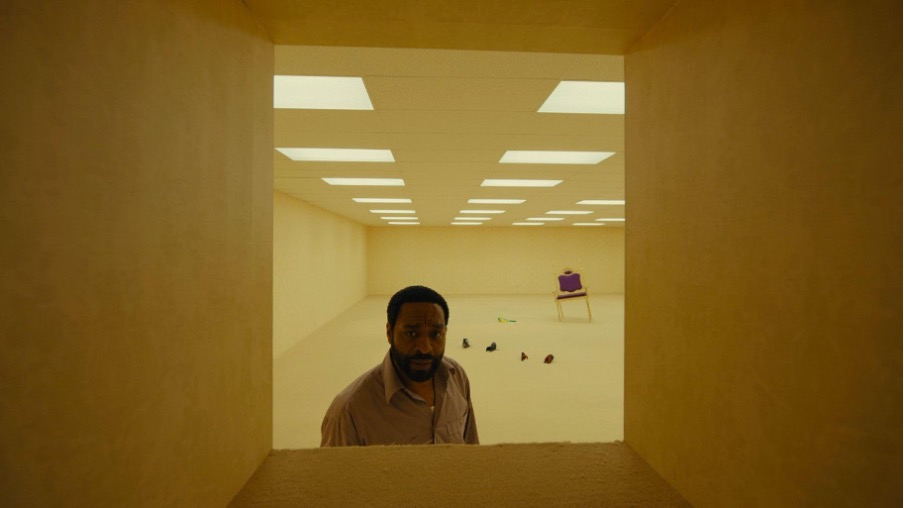
Chiwetel Ejiofor plays Clark, a failed architect and furniture store owner who finds a doorway to the Backrooms in his store’s basement | Still from A24
One of Backrooms’ greatest strengths is how it weaponizes the familiar. Through its set design, ordinary objects are enlarged, misplaced, and rendered uncanny, turning everyday spaces into something deeply unsettling. The result is a constant sense of disorientation that reinforces the film’s oppressive atmosphere and makes the Backrooms feel inescapable.
The film is designed to feel like a nightmare you can’t fully wake up from—where reality itself feels unstable and unreliable. Even the most mundane details become sources of unease, as if everything is almost right but never quite correct.
This distortion extends beyond the yellow walls of the Backrooms. The horror gradually shifts inward, toward something even more unsettling: the fragility and darkness of the human mind.
The Psychology of Fear
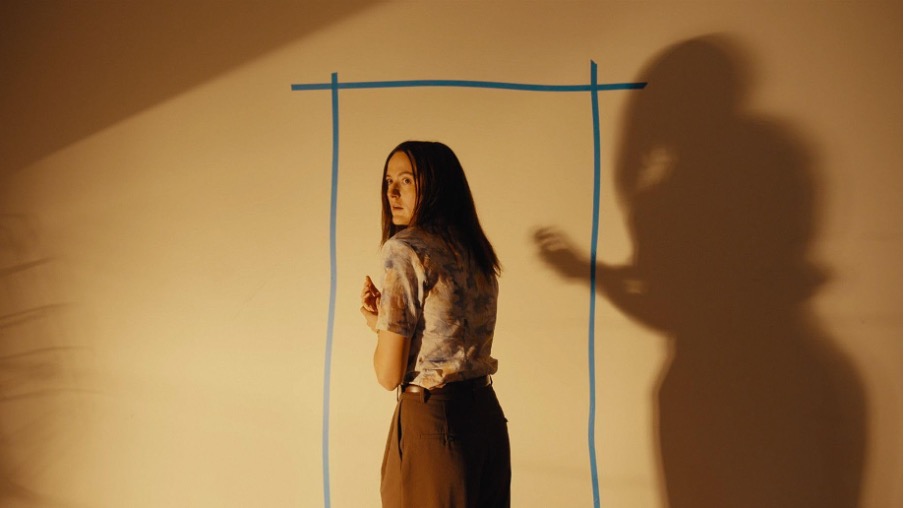
Renate Reinsve as Dr. Mary Kline, Clark’s therapist | Still from A24
Backrooms leans heavily into psychological horror, using its characters’ memories and traumas as the driving force behind the story. Its extended runtime allows these themes to develop, tying trauma and abuse directly to the nature of the Backrooms itself. Memories are not just important to the characters—they are fundamental to the lore, shaping both the narrative and the world they inhabit.
While trying to escape whatever entities reside within it, the characters are also being pursued by a bigger monster: the unresolved wounds of their past. As a result, the supernatural elements feel less like external threats and more like extensions of the characters themselves, giving the story a more personal and human dimension.
That said, the film still delivers the creatures and entities synonymous with the Backrooms, leading into an ending that may leave viewers with more questions than answers.
The Inevitability of Being Lost
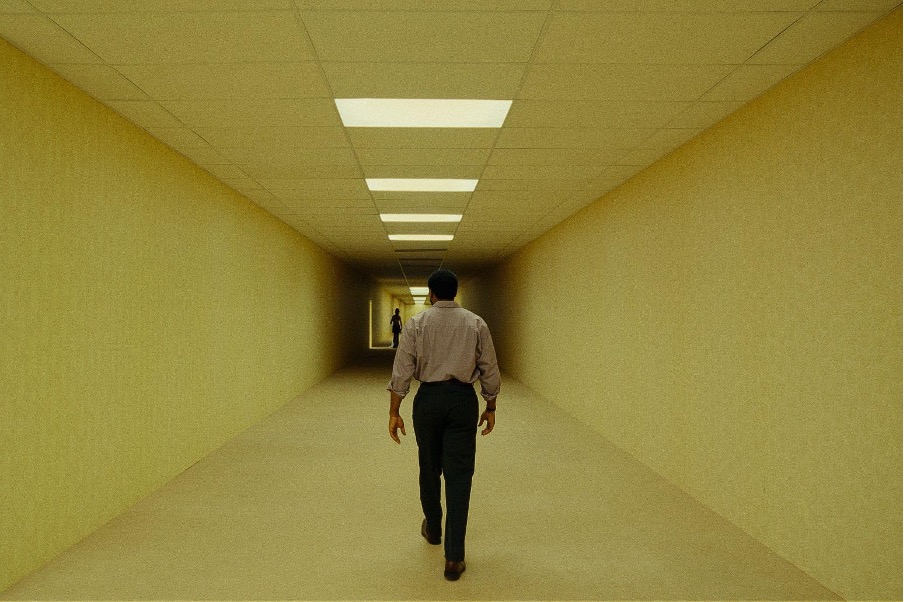
Still from A24
The film’s commitment to ambiguity is both its greatest strength and its biggest weakness. Some mysteries feel intentional, encouraging viewers to piece together clues and form their own interpretations. Others become so abstract that they border on confusion, making it unclear whether certain questions are meant to remain unanswered or simply underdeveloped. This becomes especially noticeable in the second half, where symbolism and surreal imagery often take precedence over narrative clarity.
At the same time, that uncertainty may be the point. The Backrooms has never been a concept built around concrete answers. Its appeal lies in ambiguity—the feeling that something always exists just beyond comprehension. In that sense, the film succeeds in translating that experience to the big screen, even if it occasionally does so at the expense of accessibility.
The Final Verdict: Backrooms is not the kind of film everyone will enjoy, but that doesn’t make it a bad one. It remains unsettling, atmospheric, and a mystery worth getting lost in.
SEA Wave rates Backrooms 3 out of 5 waves.