
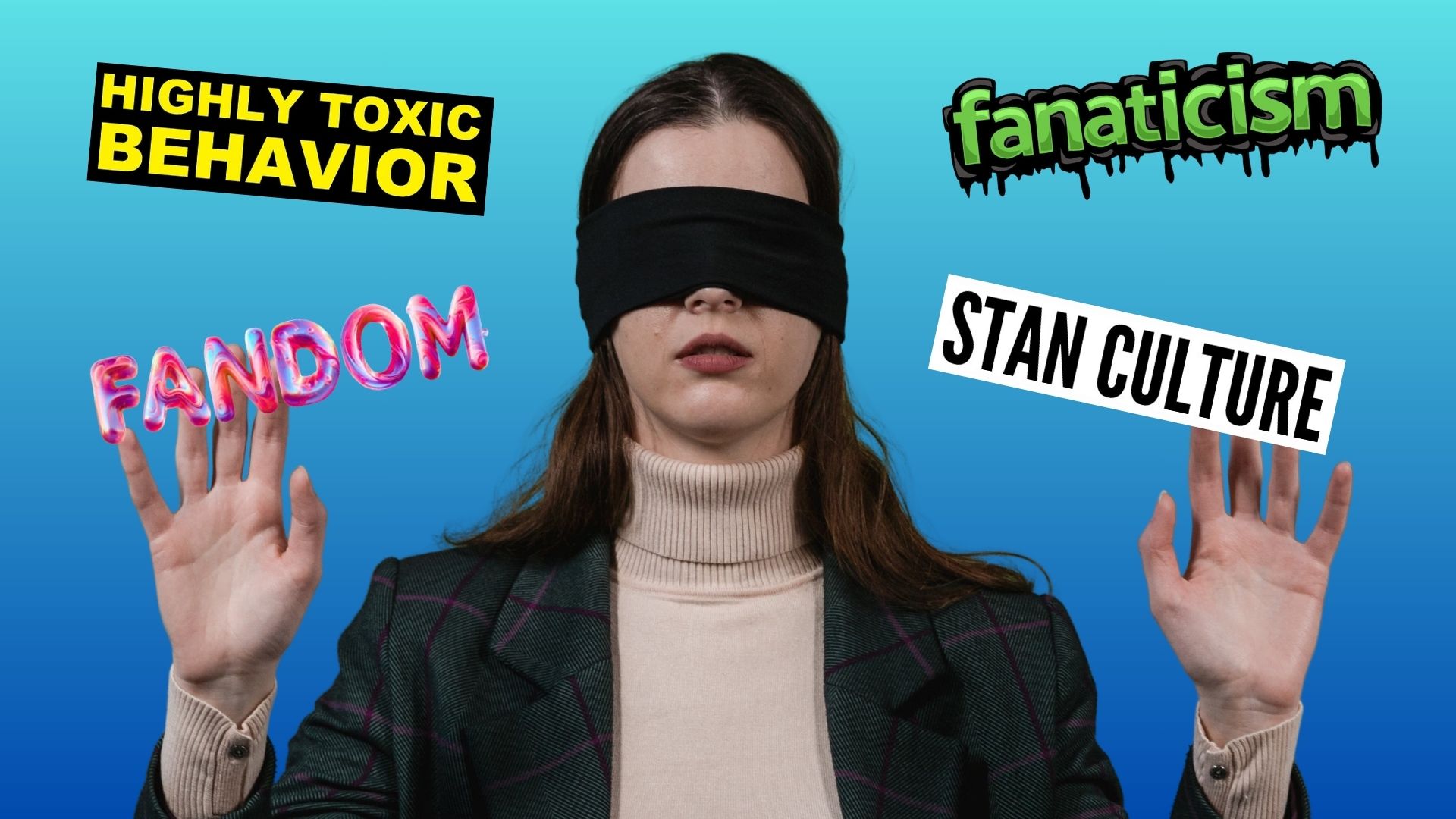
Ever wondered why problematic artists are still flying to other countries to have their concerts or fanmeets? Or, in some cases, even starting a new career here? Why do artists continue to choose the global south and Southeast Asia, and what role do we play in making this possible?
Let’s take a deep look about what fanaticism is and why it continues to exist in various fandoms around the world.
Blind Fanaticism
A fanatic, as defined by Merriam Webster, is a person who is extremely enthusiastic and devoted to a particular interest or activity. Originally, the term fanatic referred to someone with intense religious devotion, but over time, its meaning expanded to describe people who show extreme and unquestioning devotion to a person, group, belief, or activity. Today, we can see this kind of behavior in politics, sports, and in this case, the entertainment industry.
We often think of a fanatic as someone who is deeply committed to a specific person, group, belief, or activity. However, that commitment or devotion can sometimes become so strong that they refuse to reconsider their beliefs or accept information that challenges their views. This is where fanaticism can become ‘blind’.
Fanatics can become hostile toward those with opposing views. Even when presented with evidence or valid criticism, they choose to ignore it, dismiss it, or defend what they believe in at all costs. Once their beliefs are questioned, some may even respond with aggression toward those with opposing views. In other contexts, fanatics believe that their beliefs or group are superior to others, leading them to look down or disrespect people who do not share the same sentiments or viewpoints.
Fandom culture in Southeast Asia
One of the most recognizable forms of fandom culture in Southeast Asia is the staggering amount of online presence of fans across various industries, from TV and movies, to sports, to music, and more!
According to research by Campaign Asia-Pacific, 93% of APAC youth say fandoms are a form of escapism and a way to have fun and turn down the noise of the world around them and get away from bad news. Meanwhile, 66% say it helps them to connect and find friends while giving them a sense of belonging, and 63% say that it helps them express their identities and creativity.
Being passionate about an artist and finding happiness in their work create happy memories and connections. Fandoms become a space where long-time friendships are also formed. The fandom itself isn’t exactly the problem. But it is when admiration becomes so strong that fans become unwilling to acknowledge an artist’s harmful actions. The blind fanaticism begins with these types of behaviors.
What happens when a celebrity is ‘cancelled’?
Most of the time, the support we give comes from a genuine place. Fans grow attached to artists because of their music, performances, characters, personalities, or the version of themselves that they show to the public. But, not every artist acts the same way in private as they do in public.
And while that can be disappointing, it is not necessarily the fans’ fault. We cannot blame someone for supporting a person they believed was a good influence or someone worthy of admiration. Discovering the truth about an artist’s harmful actions or behavior also gives us a choice: whether to continue supporting them or to hold them accountable.
Today, social media allows cancel culture to spread quickly. While not everyone agrees with the idea of cancel culture, social media has also become a space where an artist’s harmful behavior, controversial actions, or past issues can be brought to light.
In countries such as South Korea and Japan, public backlash against celebrities can happen quickly, especially when the person involved is well-known. Luxury brands may cut ties with them, companies may remove promotional materials featuring them, and fans may organize protests outside agency buildings. In some cases, protest trucks or flower wreaths are sent as a symbol that fans believe the celebrity’s career should come to an end.
However, this also raises another issue with the unequal treatment of men and women. Women who were involved in controversies can sometimes lose opportunities to work or rebuild their careers, while some men may still be able to continue their careers even after being ‘cancelled’ for their actions.
But if an artist is no longer welcome in their own country, why are they still welcomed in other countries?
Does this mean that Southeast Asians are tolerating the artist and their actions?
Countries from the global south are often seen as forgiving, patient, and value second chances. These values can be meaningful and important, but when taken too far, they can also cause fans to overlook harmful actions. This is where blind fanaticism comes in. Fans may use forgiveness and second chances as reasons to immediately welcome back a cancelled artist or celebrity without asking whether that person has actually taken responsibility for what they have done.
One of the most common arguments when discussing controversial artists is also the idea of ‘separating the art from the artist’. In a TikTok video, daxiebebe explained this concept through the lenses of Roland Barthes, Michel Foucault, and Sarah Ahmed’s works.
According to Roland Barthes’ The Death of the Author, once a book is published or a movie is released, its meaning is no longer completely controlled by its creator. The audience is free to interpret the work based on their own experiences, emotions, and understanding.
However, Michel Foucault’s Author Function explained that a famous person’s name is not just attached to their work, it can also function as a brand with money, influence, and power behind it. This is why critics argue that watching a celebrity’s movie, buying their merchandise, or streaming their music is not always just about appreciating the art. In many cases, that support can also financially benefits and strengthens the artist’s platform.
Lastly, Sarah Ahmed’s Affect Theory helps explain why separating the art from the artist can also be emotionally difficult. Her concept of ‘sticky objects’ suggests that experiences and history can become attached to certain people or things. For example, it can be difficult to watch a scene featuring an artist accused of abuse without thinking about the accusations against them. Their actions and the emotions connected to them can become difficult to separate from their work.
But at the end of the day, we can continue to admire an artist and appreciate their work without losing our ability to think critically. We can give people opportunities to change while still asking them to take responsibility for the harm they have caused. But being a fan should not mean defending every action, ignoring harmful behavior, or demanding forgiveness without accountability.
Supporting someone responsibly means being willing to question them and hold them accountable, but if an artist refuses to acknowledge their mistakes or take responsibility for their harmful actions, perhaps it is time to recognize when to walk away. And while separating the art from the artist may be possible in some situations, there are times when the artist’s actions becomes too impossible to ignore and continuing to support their work also means contributing to their influence and platform.