
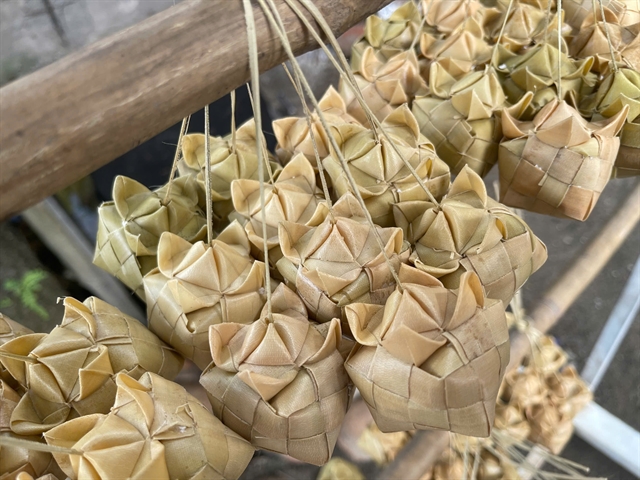
The province of An Giang, located in South Vietnam, is mostly known for its agriculture and textiles. But bordering Cambodia, it’s also home to a fusion of Khmer and Vietnamese cultures. In this melting pot of, you’ll find pomegranate-shaped rice cakes wrapped in palm leaves called ka tum cakes—something unique to Khmer culinary craft, but can be found in Vietnam.
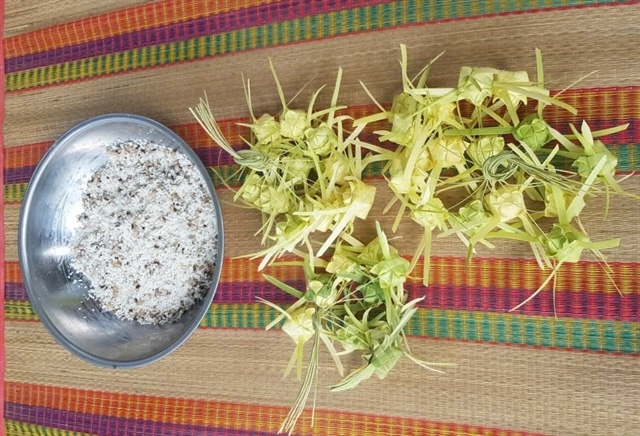
The name of the cake comes from the Khmer word ka tum meaning “pomegranate” or “something that is wrapped around,” hence the cakes’ shape of a blooming flower that has a knot at the top. Pomegranates symbolize abundance, completeness and good fortune in Khmer culture, which makes ka tum cakes an important part of Khmer traditions. Made of sticky rice, boiled white beans, freshly grated coconut, sugar, and a tiny amount of salt to balance all the flavors, these cakes become offerings during Chôl Chnăm Thmây (New Year), Sen Dolta (ancestor honoring), and Óoc Om Bóc (water worshiping).
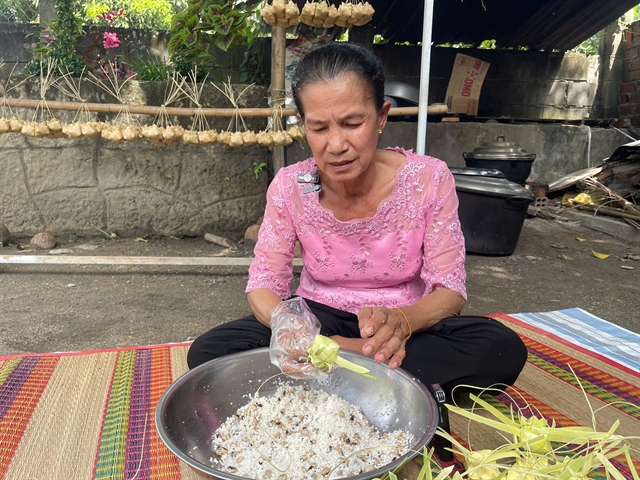
In an interview with Viet Nam News, Néang Sóc Senl, chairwoman of the Women’s Union of O Lam Commune shared, “I have devoted more than forty-four years to making ka tum, and the most difficult stage is weaving the palmyra leaves, because even a small mistake can ruin the shape of the cake or cause the filling to leak.”
The method of how ka tum is created is a reflection of the agricultural foundations of An Giang province, and has been passed down from generation to generation of artisans like Senl. Every step of the way, from the preparation to the finished product, ka tum reflects a way of life for the Khmer people residing in Southern Vietnam. When enjoying this cake, you take the time to peel away the wrapping as if discovering a hidden treasure within the confines of the palmyra leaves—an apt symbolism for discovering the treasures of everyday life.
The O Lam Commune led by Senl has been helping keep the traditional food alive by sharing the knowledge and incorporating it into events like the Southern Folk Cake Festival. These actions help ka tum alive, ready to be passed down for generations to come.